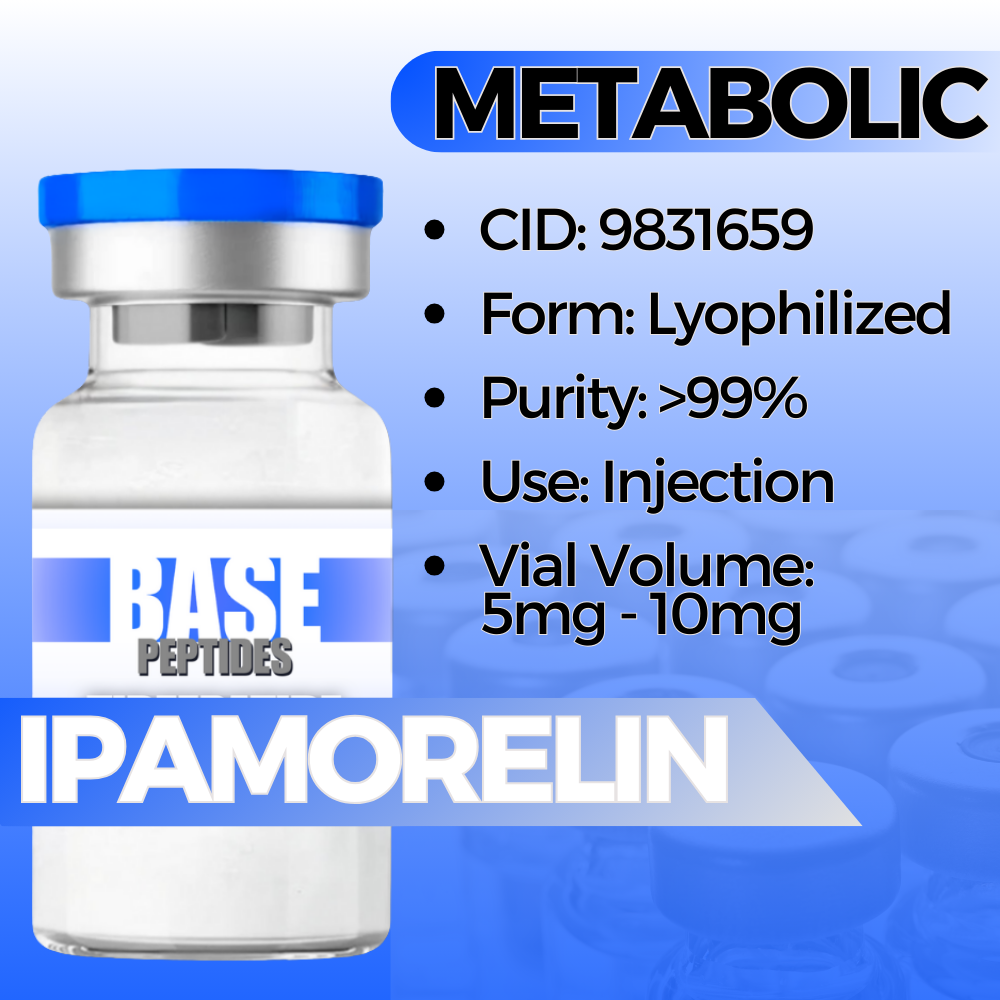
Ipamorelin – Research Peptide Overview & Scientific Information
Ipamorelin is a synthetic research peptide that has been widely studied in laboratory settings for its selective interaction with growth hormone secretagogue receptors (GHS-R). It belongs to a class of peptides used in biochemical and endocrine research to explore signaling pathways related to hormone regulation and cellular communication.
As a pentapeptide, Ipamorelin is known for its high receptor selectivity compared to other growth hormone releasing peptides. Because of this, it has become a commonly referenced compound in scientific studies focused on receptor binding behavior, peptide signaling mechanisms, and endocrine system research.
This page provides a detailed scientific overview of Ipamorelin, including its structure, mechanisms, and laboratory applications.
What is Ipamorelin?
Ipamorelin is a synthetic hexapeptide analog designed to mimic the activity of naturally occurring growth hormone secretagogues. In laboratory research, it is primarily studied for its interaction with the ghrelin receptor (GHS-R1a), which plays a role in growth hormone signaling pathways.
Unlike broader-acting peptides in the same category, Ipamorelin is noted for its selective receptor activity, making it useful in research models that require controlled and targeted signaling responses.
Researchers often include Ipamorelin in experimental studies investigating:
- Growth hormone secretagogue receptor activation
- Peptide-receptor binding specificity
- Endocrine signaling regulation
- Cellular communication pathways
Chemical and Structural Characteristics
Ipamorelin is composed of a short amino acid sequence that allows it to bind selectively to specific receptors involved in hormonal signaling pathways. Its structural simplicity compared to larger peptides contributes to its stability and research utility.
Key structural features include:
- Short-chain synthetic peptide structure
- High receptor affinity for GHS-R1a
- Stability in controlled laboratory conditions
- Selective signaling pathway activation
These properties make Ipamorelin a widely referenced compound in peptide-based research studies.
Mechanism of Action (Research Context)
In scientific studies, Ipamorelin is examined for its ability to interact with growth hormone secretagogue receptors. This receptor is part of a complex signaling system involved in endocrine regulation.
When studied in laboratory environments, Ipamorelin is used to observe:
- Receptor activation pathways
- Intracellular signaling responses
- Comparative peptide activity
- Dose-dependent receptor interactions
Its selective nature allows researchers to isolate specific signaling effects without excessive cross-reactivity seen in other peptide compounds.
Scientific Applications
Ipamorelin is used in a variety of research settings, particularly in studies focused on endocrinology, molecular biology, and receptor pharmacology. Common applications include:
- Growth hormone secretagogue receptor research
- Peptide signaling pathway studies
- Cellular metabolism experiments
- Comparative analysis with other GHRP-class peptides
- Neuroendocrine signaling models
Because of its selectivity, Ipamorelin is often used as a reference compound in controlled experimental designs.
Comparison with Other Peptides
In peptide research, Ipamorelin is frequently compared with other growth hormone secretagogues such as GHRP-6. While both interact with similar receptor systems, they differ in selectivity and signaling behavior.
Researchers often analyze differences in:
- Receptor specificity
- Signaling intensity
- Experimental stability
- Off-target activity profiles
These comparisons help build a deeper understanding of peptide-receptor interactions in biological systems.
Storage and Handling (Research Use)
In laboratory environments, proper storage and handling are essential to maintain peptide stability. Standard research protocols typically include:
- Storage in a cool, dry environment
- Protection from light and heat exposure
- Use of sterile laboratory conditions
- Controlled reconstitution procedures
Maintaining proper conditions ensures consistent performance in experimental applications.
Important Research Disclaimer
It’s intended strictly for laboratory and scientific research use only. It is not approved for human consumption, medical treatment, or diagnostic use. All handling and research must comply with applicable local regulations and institutional guidelines.
Conclusion
It’s a selective synthetic peptide widely studied in scientific research for its interaction with growth hormone secretagogue receptors. Its unique receptor specificity makes it a valuable tool in endocrine and molecular biology studies focused on signaling pathways and peptide behavior.
Ongoing research continues to explore its role in receptor activation models and comparative peptide analysis, contributing to a broader understanding of hormone-related signaling systems.


Reviews
There are no reviews yet.