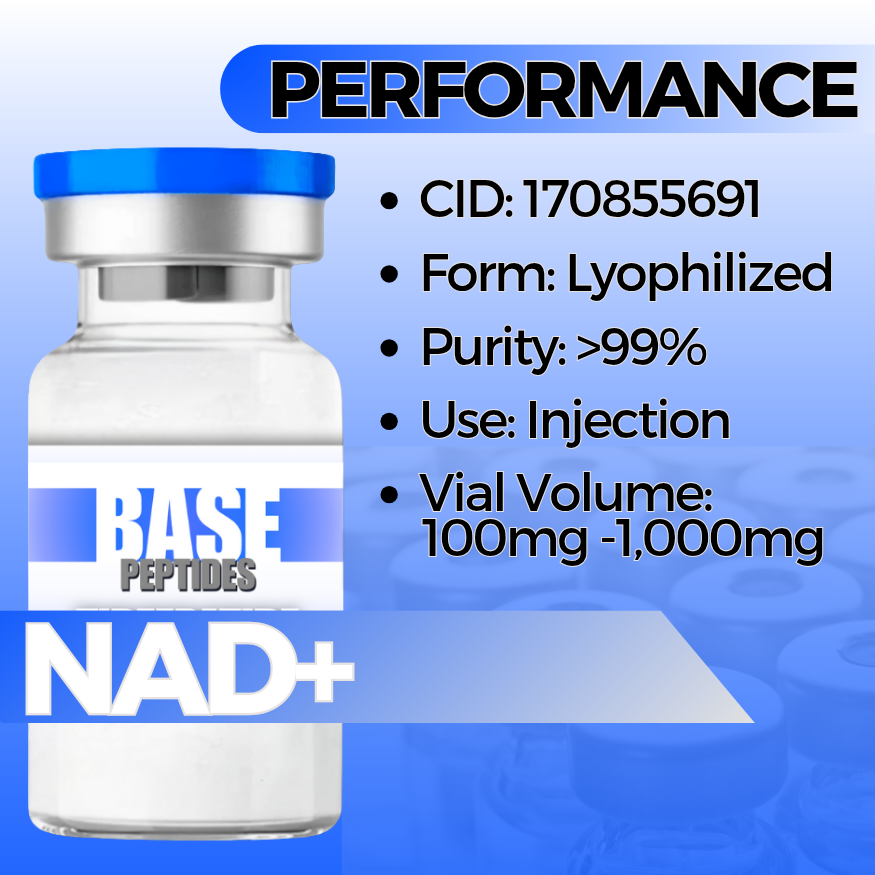
NAD+ (Nicotinamide Adenine Dinucleotide) – Overview & Biological Research Guide
NAD+ (Nicotinamide Adenine Dinucleotide) is a coenzyme found in all living cells and is essential for energy metabolism and cellular function. It plays a central role in redox reactions, acting as an electron carrier in metabolic pathways that convert nutrients into usable cellular energy.
In scientific research, NAD+ is widely studied for its involvement in mitochondrial function, DNA repair processes, and cellular signaling mechanisms. Because of its fundamental role in biology, NAD+ is a major focus in biochemistry, molecular biology, and aging-related research.
What is NAD+?
NAD+ is a naturally occurring coenzyme present in every cell of the body. It exists in two forms:
- NAD+ (oxidized form)
- NADH (reduced form)
Together, these forms participate in oxidation-reduction (redox) reactions that are critical for energy production.
In laboratory and biochemical research, NAD+ is studied as a key regulator of:
- Cellular respiration
- Mitochondrial energy production
- Enzymatic reactions involving dehydrogenases
- Metabolic pathway efficiency
Because of its central role in metabolism, NAD+ is considered one of the most important molecules in cellular biology.
Biological Role of NAD+
It’s essential for maintaining normal cellular function. It acts as a cofactor in many enzymatic reactions and is directly involved in energy transfer processes within cells.
Key biological roles include:
- Supporting ATP production through metabolic pathways
- Participating in oxidative phosphorylation
- Regulating cellular redox balance
- Acting as a substrate for enzymes involved in DNA repair
- Supporting cellular stress response systems
These functions make NAD+ fundamental to life at the cellular level.
NAD+ in Mitochondrial Research
One of the most important areas of it research is mitochondrial function. Mitochondria are responsible for producing energy in cells, and NAD+ plays a key role in this process.
In research settings, It’s studied for its involvement in:
- Electron transport chain activity
- ATP synthesis efficiency
- Mitochondrial biogenesis signaling
- Energy metabolism regulation
Understanding it dynamics helps researchers explore how cells generate and manage energy.
NAD+ and DNA Repair Mechanisms
It’s also involved in DNA repair processes through its role as a substrate for enzymes such as PARPs (poly ADP-ribose polymerases). These enzymes help detect and repair DNA damage.
Research areas include:
- Cellular response to DNA damage
- Genome stability mechanisms
- Enzyme activation in repair pathways
- Cellular stress adaptation
This makes it important in studies related to genomic integrity and cellular maintenance.
Scientific Applications of NAD+ Research
It’s widely used in laboratory and biochemical research, including:
- Metabolic pathway studies
- Mitochondrial function analysis
- Enzyme activity experiments
- Cellular aging research models
- Oxidative stress studies
Researchers use it as a central molecule to understand how cells process energy and respond to stress.
NAD+ and Cellular Metabolism
It’s deeply involved in metabolic regulation. It participates in glycolysis, the citric acid cycle, and oxidative phosphorylation.
In research models, it helps scientists study:
- Energy conversion efficiency
- Metabolic flexibility
- Nutrient utilization pathways
- Cellular energy balance
Because metabolism is central to all biological systems, It’s a critical molecule in life sciences research.
Importance in Aging and Cellular Health Research
The levels naturally decline in biological systems over time, which has led to extensive research into its role in cellular aging processes.
Scientific studies often focus on:
- Age-related metabolic changes
- Mitochondrial efficiency decline
- Cellular stress resistance mechanisms
- DNA repair capacity over time
These studies aim to better understand how cellular energy systems change with biological aging.
Storage and Handling (Research Context)
In laboratory environments, It’s handled under controlled conditions to maintain stability and integrity:
- Stored in cold, dry environments
- Protected from heat, light, and moisture
- Prepared using sterile laboratory procedures
- Used according to validated experimental protocols
Proper handling ensures consistent performance in research applications.
Important Research Disclaimer
It’s discussed in this context is intended strictly for laboratory and scientific research use only. It is not approved for human consumption, medical treatment, or diagnostic use. All handling and use must comply with applicable research regulations and institutional guidelines.
Conclusion
It’s a fundamental coenzyme involved in energy production, cellular metabolism, and DNA repair. Its central role in biological systems makes it one of the most important molecules studied in modern biochemical and molecular research.
Ongoing studies continue to explore its function in mitochondrial activity, metabolic regulation, and cellular stress responses, contributing to a deeper understanding of how living systems generate and maintain energy.


Reviews
There are no reviews yet.