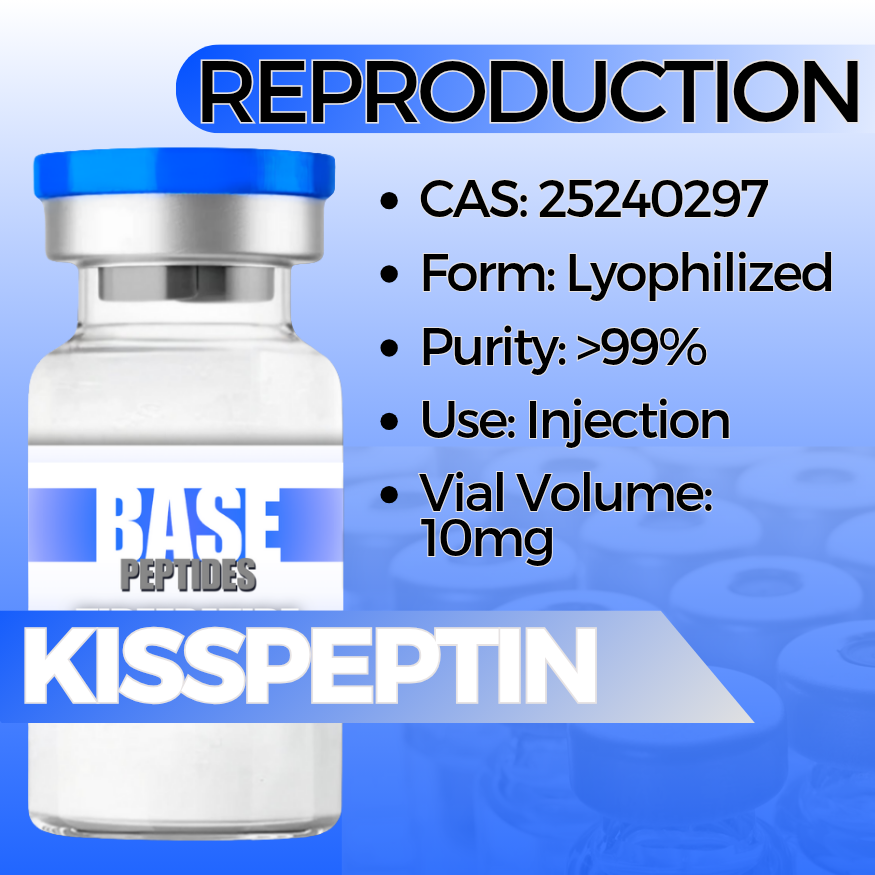
Kisspeptin-10 – Research Peptide Overview & Scientific Information
Kisspeptin-10 is a synthetic peptide fragment derived from the larger kisspeptin protein family, which plays a central role in reproductive hormone signaling pathways. In scientific and laboratory research, Kisspeptin-10 is widely studied for its interaction with the hypothalamic-pituitary-gonadal (HPG) axis and its regulatory influence on gonadotropin-releasing hormone (GnRH) activity.
This peptide is commonly used in controlled research environments to better understand endocrine signaling, reproductive biology, and receptor-mediated hormone regulation mechanisms.
What is Kisspeptin-10?
Kisspeptin-10 is a shortened, biologically active fragment of kisspeptin proteins. It is known for its strong binding affinity to the GPR54 receptor (also known as the kisspeptin receptor), which plays a key role in reproductive hormone regulation.
In laboratory research, Kisspeptin-10 is studied for its ability to activate signaling pathways involved in:
- GnRH secretion regulation
- Hormonal feedback loops in the endocrine system
- Reproductive axis signaling mechanisms
- Cellular receptor activation studies
Because of its potency and short peptide structure, Kisspeptin-10 is often used in precise experimental models.
Biological Role in Research Models
Kisspeptin signaling is considered a critical upstream regulator of reproductive hormone cascades. In research environments, Kisspeptin-10 is used to study how the brain communicates with the endocrine system.
Key research focuses include:
- Activation of GnRH neurons
- Regulation of luteinizing hormone (LH) and follicle-stimulating hormone (FSH) release
- Mapping hypothalamic signaling pathways
- Studying puberty onset mechanisms in biological models
These functions make Kisspeptin-10 an important tool in reproductive endocrinology research.
Mechanism of Action (Research Context)
In laboratory studies, Kisspeptin-10 binds to the GPR54 receptor, initiating a signaling cascade that influences GnRH secretion. This cascade ultimately affects downstream hormone regulation within the hypothalamic-pituitary-gonadal axis.
Researchers use Kisspeptin-10 to observe:
- Receptor binding activity
- Signal transduction efficiency
- Hormonal feedback responses
- Neuroendocrine pathway activation
Its direct and potent receptor interaction makes it valuable for controlled mechanistic studies.
Scientific Applications
Kisspeptin 10 is primarily used in biomedical and endocrine research, including:
- Reproductive hormone signaling studies
- Neuroendocrinology research models
- Fertility and puberty regulation research
- Hypothalamic signaling pathway analysis
- Peptide-receptor interaction studies
It is especially useful in experiments that aim to understand hormonal regulation at the central nervous system level.
Why Kisspeptin-10 is Important in Research
Kisspeptin 10 is considered a key peptide in reproductive biology research because it acts as a central regulator of hormone signaling. Its study helps researchers understand how upstream signals in the brain influence reproductive hormone release.
This has implications for:
- Endocrine system modeling
- Hormone feedback loop studies
- Developmental biology research
- Neuroendocrine communication analysis
Storage and Handling (Research Use Only)
In laboratory environments, proper handling of Kisspeptin-10 is essential to maintain stability and accuracy in experimental results. Standard practices include:
- Storage in low-temperature, controlled environments
- Protection from light and moisture exposure
- Use of sterile laboratory conditions
- Reconstitution following validated protocols
Maintaining correct conditions ensures consistent performance in research applications.
Important Research Disclaimer
Kisspeptin 10 is intended strictly for laboratory and scientific research use only. It is not approved for human consumption, medical treatment, or diagnostic use. All handling and use must comply with applicable institutional guidelines and local regulations.
Conclusion
Kisspeptin 10 is a powerful research peptide widely used in the study of reproductive hormone regulation and neuroendocrine signaling. Its ability to interact with the GPR54 receptor makes it a valuable tool for investigating the hypothalamic control of reproductive function.
Ongoing research continues to explore its role in hormonal signaling pathways, contributing to a deeper understanding of endocrine system regulation and reproductive biology.


Reviews
There are no reviews yet.