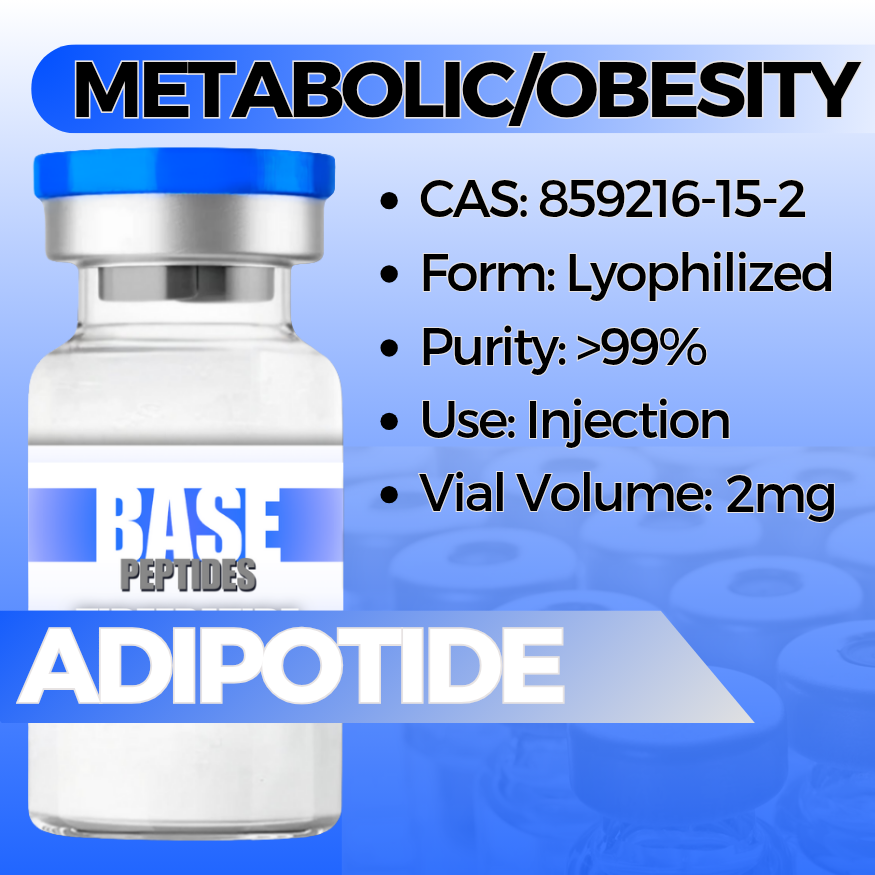
Adipotide – Vascular-Targeting Peptide Research Overview & Metabolic Studies
Adipotide is a synthetic peptide studied in laboratory and preclinical research for its interaction with adipose (fat) tissue vasculature and metabolic signaling pathways. It is designed to target blood vessels associated with fat tissue in experimental models, making it a compound of interest in obesity-related research and cellular metabolism studies.
In scientific contexts, Adipotide is used to investigate how vascular targeting mechanisms and peptide-based signaling can influence adipose tissue biology, energy balance, and metabolic regulation.
What is Adipotide?
Adipotide is a synthetic peptide developed as a targeted ligand designed to bind receptors expressed on blood vessels supplying white adipose tissue. It is not a hormone or naturally occurring peptide but a designed research molecule.
In laboratory settings, Adipotide is studied for its involvement in:
- Adipose tissue vascular targeting models
- Metabolic signaling pathway research
- Blood vessel receptor interaction studies
- Energy balance and lipid storage systems
Its design allows researchers to explore targeted delivery and tissue-specific biological interactions.
Vascular Targeting in Research
One of the defining features of Adipotide research is its interaction with the vasculature of adipose tissue. White adipose tissue requires a blood supply, and Adipotide is studied for its ability to selectively interact with those vascular systems in experimental models.
Research focuses include:
- Adipose tissue blood vessel targeting
- Vascular receptor binding mechanisms
- Tissue-specific peptide interaction models
- Microcirculation changes in adipose systems
These studies help researchers understand how vascular targeting can influence tissue biology.
Mechanism of Action (Research Context)
In laboratory research, Adipotide is investigated for its binding to specific receptors on endothelial cells associated with fat tissue vasculature. While mechanisms vary across studies, it is examined for its potential to influence:
- Annexin A2 and prohibitin receptor systems (in experimental models)
- Endothelial cell signaling pathways
- Vascular integrity and signaling responses
- Tissue-specific peptide uptake mechanisms
Researchers use Adipotide to explore how targeted peptides can interact with defined biological structures.
Scientific Applications
Adipotide is primarily used in preclinical and molecular biology research focused on metabolism and vascular biology.
Common applications include:
- Adipose tissue biology studies
- Vascular targeting mechanism research
- Metabolic pathway modeling
- Endothelial cell interaction experiments
- Tissue-specific peptide delivery research
These applications help scientists explore how targeted peptides interact with biological systems at the tissue level.
Metabolic and Adipose Tissue Research
A key area of interest for Adipotide is its role in adipose tissue metabolism studies.
Researchers investigate:
- Fat tissue vascular structure and function
- Adipocyte (fat cell) signaling systems
- Lipid storage and mobilization models
- Tissue energy balance regulation
These studies contribute to a broader understanding of how adipose tissue is regulated in biological systems.
Vascular Biology Research
Adipotide is also used in vascular biology research due to its interaction with endothelial systems.
Research focuses include:
- Endothelial receptor signaling pathways
- Blood vessel structure in adipose tissue
- Vascular remodeling in metabolic models
- Tissue-specific blood flow regulation
This makes it relevant in studies of microvascular biology and tissue specialization.
Peptide Targeting and Delivery Research
Another important application of Adipotide is in peptide targeting system studies.
Researchers examine:
- Tissue-specific peptide delivery mechanisms
- Ligand-receptor binding specificity
- Selective uptake in biological tissues
- Efficiency of targeted molecular systems
These studies are valuable for developing targeted therapeutic delivery models in research environments.
Structural Characteristics
Adipotide is a synthetic peptide designed for receptor targeting in vascular systems.
Key characteristics include:
- Synthetic multi-domain peptide structure
- Designed receptor-binding motifs
- Stability in controlled laboratory conditions
- High specificity in experimental models
Its structure is optimized for selective biological interaction studies.
Importance in Scientific Research
Adipotide is important in research because it provides a model for studying targeted peptide interactions with adipose tissue vasculature.
Key research benefits include:
- Understanding tissue-specific vascular targeting
- Studying adipose tissue biology
- Exploring peptide-receptor interaction systems
- Investigating metabolic and vascular coordination
These insights contribute to advancements in metabolic biology and vascular research.
Comparative Research Context
In peptide science, Adipotide is often compared with other targeting peptides and metabolic research compounds.
Researchers analyze:
- Differences in receptor binding specificity
- Tissue selectivity and targeting efficiency
- Stability and degradation profiles
- Biological response patterns in vascular systems
These comparisons help refine targeted peptide delivery research models.
Storage and Handling (Research Context)
In laboratory environments, Adipotide is handled under strict conditions to maintain stability and experimental accuracy:
- Stored in low-temperature environments
- Protected from light and moisture
- Prepared using sterile laboratory techniques
- Used within validated research protocols
Proper handling ensures reproducibility in experimental results.
Important Research Disclaimer
Adipotide is intended strictly for laboratory and scientific research use only. It is not approved for human consumption, medical treatment, or diagnostic use. All research must comply with applicable institutional guidelines and local regulations.
Conclusion
Adipotide is a synthetic peptide studied for its role in adipose tissue vascular targeting, metabolic signaling, and endothelial interaction research. Its ability to selectively bind adipose-related blood vessel systems makes it a valuable tool in metabolic and vascular biology studies.
Ongoing research continues to explore its applications in tissue-specific targeting and metabolic regulation models, contributing to a deeper understanding of vascular biology and peptide-based systems.


Reviews
There are no reviews yet.