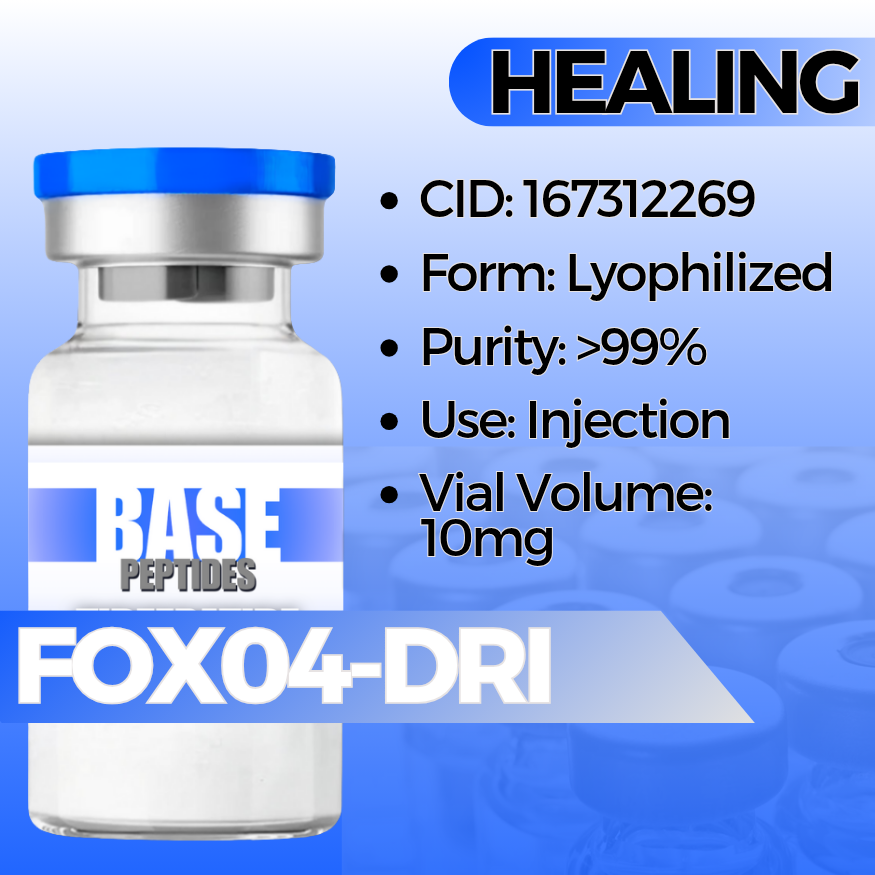
FOXO4-DRI – Research Peptide Overview & Cellular Senescence Study
FOXO4-DRI is a synthetic peptide studied in molecular biology research for its interaction with cellular senescence pathways and protein–protein interactions involving the FOXO4 transcription factor. It is designed to disrupt specific intracellular signaling complexes, making it a subject of interest in studies focused on cell cycle regulation, apoptosis signaling, and aging-related cellular processes.
In scientific environments, FOXO4-DRI is primarily examined in controlled laboratory models to better understand how senescent cells maintain survival signaling and how targeted peptide interference can influence these pathways.
What is FOXO4-DRI?
FOXO4-DRI (FOXO4–D-retro-inverso peptide) is a modified peptide engineered to mimic a segment of the FOXO4 protein while improving stability against enzymatic degradation. The “DRI” (D-retro-inverso) design uses D-amino acids arranged in reverse sequence, allowing the peptide to retain functional binding properties while increasing resistance to breakdown.
In research settings, FOXO4-DRI is studied for its ability to interfere with interactions between FOXO4 and p53, two proteins involved in cellular stress response and survival signaling.
Key research interests include:
- Protein–protein interaction disruption
- Cellular senescence signaling pathways
- Apoptosis-related mechanisms
- Gene regulation and transcription factor activity
Mechanism of Action (Research Context)
In laboratory studies, FOXO4-DRI is evaluated for its ability to disrupt the interaction between FOXO4 and the tumor suppressor protein p53. This interaction is thought to play a role in maintaining the survival of senescent cells.
Researchers use FOXO4-DRI to investigate:
- FOXO4–p53 binding dynamics
- Cellular stress response pathways
- Apoptotic signaling activation
- Intracellular protein localization changes
By interfering with these interactions, the peptide provides a model for studying how senescent cells regulate survival and signaling pathways.
Scientific Applications
FOXO4-DRI is widely used in experimental research focused on cellular biology and molecular signaling. Common applications include:
- Cellular senescence research models
- Protein interaction studies
- Gene expression and transcription analysis
- Apoptosis pathway investigations
- Aging-related cellular studies
These applications are conducted under controlled laboratory conditions to explore complex biological systems.
Cellular Senescence Research
One of the primary areas of interest for FOXO4-DRI is its role in studies of cellular senescence. Senescent cells are characterized by a stable cell cycle arrest and altered signaling behavior.
In research environments, FOXO4-DRI is used to examine:
- Senescent cell survival mechanisms
- Stress-induced signaling pathways
- Cellular aging models
- Protein interactions in senescent cells
These studies aim to better understand how senescent cells persist and influence biological systems.
Structural and Biochemical Characteristics
FOXO4-DRI is designed using D-retro-inverso peptide technology, which improves its stability and resistance to enzymatic degradation.
Key characteristics include:
- D-amino acid peptide structure
- Enhanced resistance to proteolytic breakdown
- Retention of target binding capability
- Stability in controlled laboratory environments
This design allows researchers to study peptide interactions over longer experimental periods.
Importance in Molecular Biology Research
FOXO4-DRI is important in research because it provides a tool for studying targeted disruption of protein interactions within cells. Understanding these interactions is critical for mapping cellular signaling networks.
Key research benefits include:
- Investigating transcription factor activity
- Studying stress response signaling pathways
- Exploring apoptosis regulation mechanisms
- Understanding cellular aging processes
Its targeted mechanism makes it useful for dissecting complex intracellular systems.
Comparative Research Context
In peptide and molecular research, FOXO4-DRI is often compared with other compounds used to study senescence and apoptosis pathways.
Researchers analyze:
- Differences in protein interaction targeting
- Stability and degradation resistance
- Specificity of signaling pathway disruption
- Effects on cellular response models
These comparisons help refine understanding of how peptide-based tools influence cellular systems.
Storage and Handling (Research Context)
In laboratory settings, FOXO4-DRI is handled under strict conditions to maintain stability and experimental reliability:
- Stored in low-temperature environments
- Protected from light and moisture
- Prepared using sterile laboratory protocols
- Used according to validated research procedures
Proper handling ensures reproducibility and consistency in results.
Important Research Disclaimer
FOXO4-DRI is intended strictly for laboratory and scientific research use only. It is not approved for human consumption, medical treatment, or diagnostic use. All research must comply with applicable regulations and institutional guidelines.
Conclusion
FOXO4-DRI is a specialized synthetic peptide studied for its role in disrupting protein–protein interactions associated with cellular senescence and stress response pathways. Its unique D-retro-inverso structure provides enhanced stability, making it a valuable tool in molecular biology research.
Ongoing studies continue to explore its role in cellular signaling, transcription factor interactions, and senescence-related processes, contributing to a deeper understanding of complex biological systems.


Reviews
There are no reviews yet.