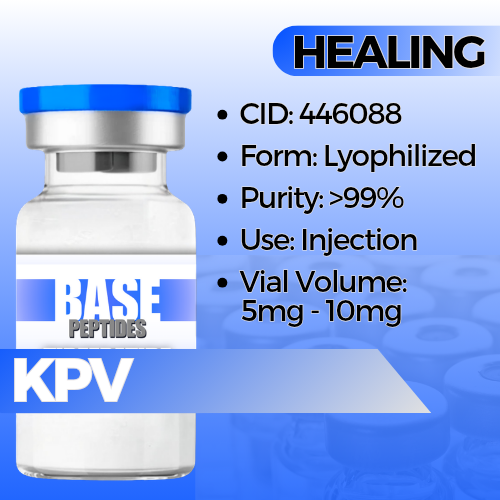
KPV Peptide – Tripeptide Overview & Inflammation Pathway Research
KPV is a synthetic tripeptide composed of three amino acids—lysine (K), proline (P), and valine (V)—and is derived from a fragment of the alpha-melanocyte-stimulating hormone (α-MSH). It is widely studied in laboratory and molecular biology research for its interaction with cellular signaling pathways, particularly those related to inflammatory response and immune system communication.
In scientific settings, KPV is of interest due to its small size, stability, and targeted activity within experimental models. Researchers use it to explore how peptide fragments influence biochemical signaling systems and cellular response mechanisms.
What is KPV?
KPV is a short-chain peptide derived from the C-terminal end of α-MSH, a naturally occurring hormone involved in multiple biological processes. As a tripeptide, it is one of the simplest peptide structures used in research.
In laboratory environments, KPV is studied for its involvement in:
- Cellular signaling pathways
- Immune system communication
- Inflammation-related signaling mechanisms
- Molecular response regulation
Its minimal structure allows researchers to isolate specific biological interactions in controlled settings.
Origin and Biological Context
KPV originates from alpha-melanocyte-stimulating hormone (α-MSH), a peptide hormone associated with immune modulation and signaling pathways.
Research into KPV focuses on:
- Functional fragments of larger peptide hormones
- Simplified models of complex signaling systems
- Peptide-driven cellular responses
- Interaction with immune-related pathways
This makes it valuable for studying how smaller peptide sequences retain biological activity.
Mechanism of Action (Research Context)
In laboratory research, KPV is investigated for its interaction with cellular pathways associated with inflammation and immune signaling. While its full mechanism is still being explored, studies focus on its potential to influence:
- Cytokine signaling pathways
- Cellular response to inflammatory stimuli
- Intracellular communication systems
- Receptor-mediated signaling processes
Researchers use KPV to better understand how small peptides can modulate complex biological responses.
Scientific Applications
KPV is widely used in experimental research across immunology, molecular biology, and biochemistry.
Common applications include:
- Inflammation pathway analysis
- Immune system signaling studies
- Cytokine regulation experiments
- Cellular communication research
- Peptide-receptor interaction investigations
These applications provide insight into how biological systems regulate signaling at the molecular level.
KPV in Inflammation Research
One of the primary areas of interest for KPV is its role in inflammation-related signaling pathways. In research models, it is studied for its influence on:
- Cytokine production and regulation
- Cellular response to inflammatory signals
- Immune system communication networks
- Molecular pathways involved in inflammation
These studies help researchers understand how cells respond to environmental and internal stressors.
Immune System and Cellular Communication
KPV is also studied for its interaction with immune system signaling. Researchers investigate how it may influence:
- Communication between immune cells
- Regulation of immune response pathways
- Interaction with signaling molecules
- Cellular adaptation to experimental conditions
This makes it relevant in studies of immune system coordination and response.
Structural Characteristics
KPV is a tripeptide composed of:
- Lysine (K)
- Proline (P)
- Valine (V)
Key characteristics include:
- Short peptide chain (3 amino acids)
- High stability in laboratory environments
- Ability to interact with specific signaling pathways
- Suitable for targeted experimental research
Its simplicity allows for precise and controlled study designs.
Importance in Scientific Research
KPV is important in research because it demonstrates how small peptide fragments can influence complex biological systems.
Key research benefits include:
- Understanding inflammation-related signaling
- Studying immune system communication
- Exploring peptide-based regulatory mechanisms
- Investigating molecular response pathways
These insights contribute to advancements in peptide science and immunology.
Comparative Research Context
In peptide research, KPV is often compared with other α-MSH-derived peptides and inflammation-related compounds.
Researchers analyze:
- Differences in signaling pathway interaction
- Stability under laboratory conditions
- Specificity of biological effects
- Influence on cellular response models
These comparisons help refine experimental approaches and understanding.
Storage and Handling (Research Context)
In laboratory environments, It’s handled under controlled conditions to maintain stability and experimental accuracy:
- Stored in low-temperature environments
- Protected from light and moisture
- Prepared using sterile laboratory techniques
- Used within validated research protocols
Proper handling ensures reliable and reproducible results.
Important Research Disclaimer
It’s intended strictly for laboratory and scientific research use only. It is not approved for human consumption, medical treatment, or diagnostic use. All research must comply with applicable institutional guidelines and local regulations.
Conclusion
It’s a synthetic tripeptide derived from α-MSH, widely studied for its role in inflammation-related signaling and immune system communication. Its small structure and targeted activity make it a valuable tool in controlled laboratory research.
Ongoing studies continue to explore its influence on molecular pathways and cellular responses, contributing to a deeper understanding of peptide-based biological regulation.


Reviews
There are no reviews yet.