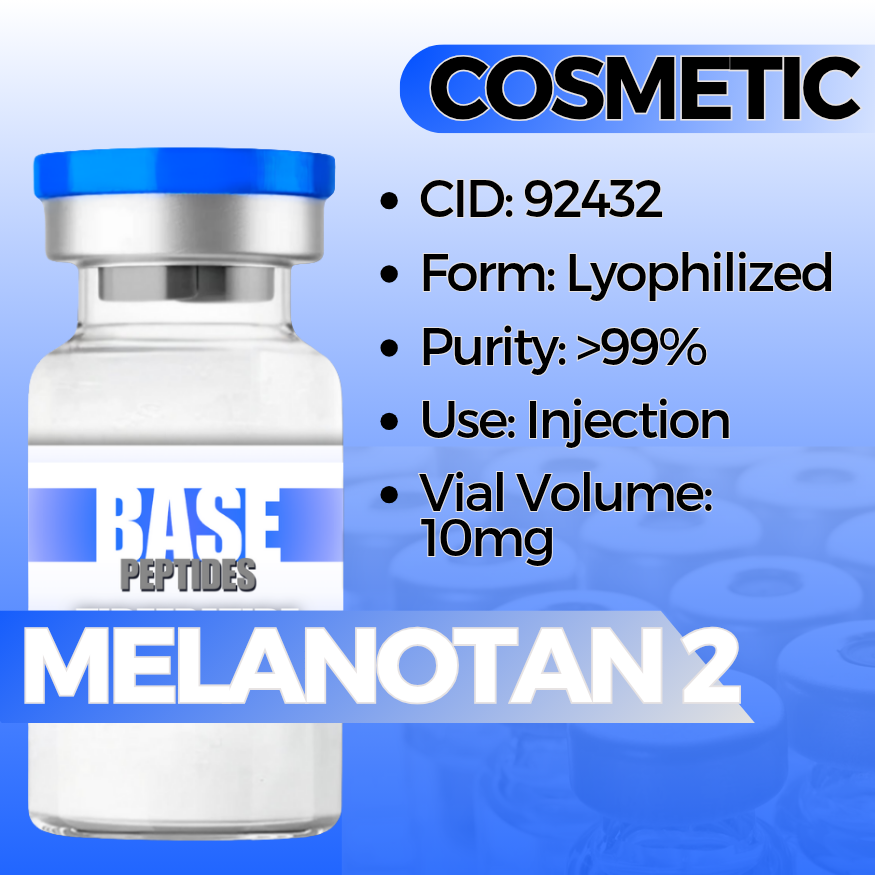
Melanotan 2 – Melanocortin Peptide Research Overview
Melanotan 2 is a synthetic peptide studied in laboratory and molecular biology research for its interaction with the melanocortin receptor system, which is involved in pigmentation signaling, energy regulation, and neuroendocrine communication. It is a modified analog of alpha-melanocyte-stimulating hormone (α-MSH) and is primarily investigated in controlled experimental models.
In scientific contexts, Melanotan 2 is used to study receptor-mediated signaling pathways, pigment-related biological processes, and broader melanocortin system functions. Its ability to bind multiple receptor subtypes makes it a widely examined compound in peptide and receptor biology research.
What is Melanotan 2?
Melanotan 2 is a synthetic cyclic heptapeptide designed to mimic the effects of α-MSH, a naturally occurring hormone involved in melanocortin signaling pathways.
In research environments, Melanotan 2 is studied for its role in:
- Melanocortin receptor activation
- Pigmentation signaling pathways
- Neuroendocrine system communication
- Cellular receptor binding mechanisms
Its structural modifications increase its stability and receptor affinity compared to natural peptides.
Melanocortin System Overview
The melanocortin system is a complex network of receptors and signaling molecules involved in multiple physiological processes, including pigmentation, energy balance, and neuroendocrine regulation.
Research into this system focuses on:
- MC1R (melanocortin 1 receptor) – pigmentation signaling
- MC3R and MC4R – metabolic and neuroendocrine regulation
- Hormonal signaling pathways
- Cellular response mechanisms
Melanotan 2 is used as a tool to study how these receptors function in biological systems.
Mechanism of Action (Research Context)
In laboratory studies, Melanotan is investigated for its interaction with melanocortin receptors, particularly MC1R and MC4R. These receptors are involved in a wide range of signaling pathways.
Researchers study Melanotan 2 for its ability to influence:
- G protein-coupled receptor (GPCR) signaling
- Cyclic AMP (cAMP) pathways
- Intracellular signal transduction
- Gene expression modulation in receptor systems
Its broad receptor activity makes it useful for studying multiple biological processes simultaneously.
Scientific Applications
Melanotan 2 is widely used in experimental research across molecular biology, endocrinology, and receptor pharmacology.
Common applications include:
- Melanocortin receptor studies
- Pigmentation pathway research
- Neuroendocrine signaling analysis
- GPCR activation experiments
- Cellular communication studies
These applications help researchers understand how receptor systems regulate biological responses.
Pigmentation Research Context
One of the primary research areas for Melanotan 2 is pigmentation biology. It is studied for its interaction with MC1R receptors, which are involved in melanin production pathways.
Research focuses include:
- Melanin synthesis signaling pathways
- Skin pigmentation regulation models
- Cellular response to melanocortin activation
- Genetic regulation of pigment-related proteins
These studies contribute to understanding how pigmentation is controlled at the molecular level.
Neuroendocrine Research Applications
Melanotan 2 is also studied for its effects on neuroendocrine signaling pathways. The melanocortin system plays a role in communication between the nervous system and endocrine functions.
Research areas include:
- Hypothalamic signaling pathways
- Hormonal regulation mechanisms
- Energy balance signaling models
- Central nervous system receptor activity
This makes Melanotan 2 relevant in broader physiological research.
Structural Characteristics
Melanotan 2 is a cyclic heptapeptide, meaning it consists of seven amino acids arranged in a ring structure, which enhances stability and receptor binding.
Key characteristics include:
- Cyclic peptide structure
- High affinity for melanocortin receptors
- Stability in laboratory conditions
- GPCR-targeting activity
These properties make it suitable for receptor-based research models.
Importance in Scientific Research
Melanotan 2 is important in research because it provides a controlled model for studying melanocortin receptor signaling and its downstream biological effects.
Key research benefits include:
- Understanding GPCR signaling pathways
- Studying pigmentation regulation mechanisms
- Exploring neuroendocrine communication systems
- Investigating receptor-ligand interactions
These insights contribute to advancements in molecular biology and receptor pharmacology.
Comparative Research Context
In peptide research, Melanotan 2 is often compared with other melanocortin-related compounds and receptor agonists.
Researchers analyze:
- Differences in receptor subtype activation
- Binding affinity and signaling strength
- Stability and metabolic resistance
- Specificity of biological responses
These comparisons help refine understanding of receptor signaling systems.
Storage and Handling (Research Context)
In laboratory environments, Melanotan 2 is handled under controlled conditions to maintain stability and accuracy:
- Stored in low-temperature environments
- Protected from light and moisture
- Prepared using sterile laboratory techniques
- Used within validated research protocols
Proper handling ensures reproducible and reliable results.
Important Research Disclaimer
Melanotan 2 is intended strictly for laboratory and scientific research use only. It is not approved for human consumption, medical treatment, or diagnostic use. All research must comply with applicable institutional guidelines and local regulations.
Conclusion
Melanotan 2 is a synthetic melanocortin receptor agonist studied for its role in pigmentation signaling, neuroendocrine communication, and receptor biology. Its interaction with multiple melanocortin receptors makes it a valuable tool in molecular and physiological research.
Ongoing studies continue to explore its effects on receptor signaling pathways and cellular communication, contributing to a deeper understanding of melanocortin system biology.



Reviews
There are no reviews yet.