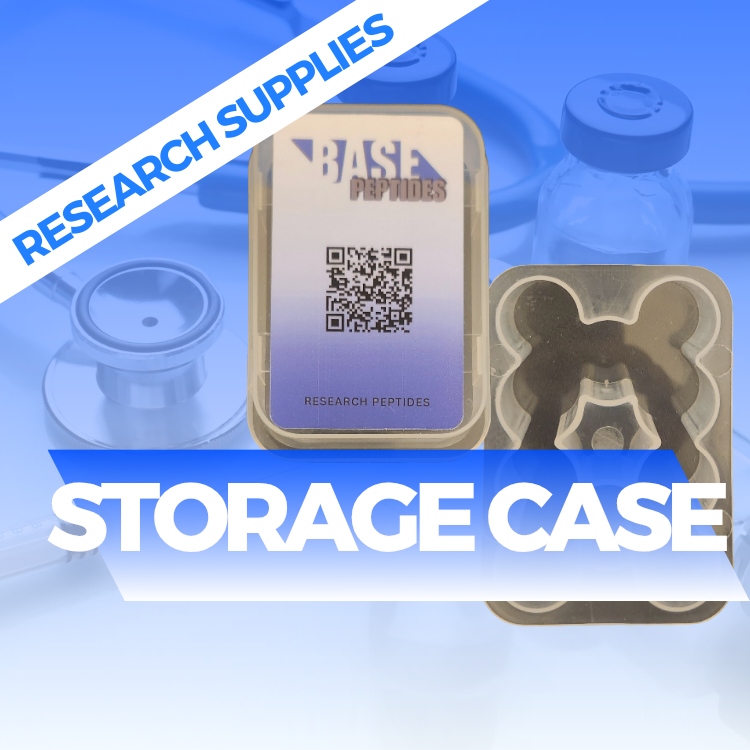
Peptide Storage Case – Safe Storage, Organization & Laboratory Use Guide
What is a Peptide Storage Case?
A peptide storage case is a protective container system designed to organize, store, and safeguard peptide vials and related research materials in controlled environments. These cases are commonly used in laboratories, research facilities, and pharmaceutical settings where temperature stability, organization, and sample protection are important.
Peptides are sensitive compounds that can degrade when exposed to heat, light, or improper handling conditions. A storage case helps reduce these risks by providing structured organization and environmental protection.
Why Proper Peptide Storage Matters
Peptides are biological molecules that can be highly sensitive to environmental factors such as:
- Temperature fluctuations
- Light exposure
- Moisture
- Physical agitation
- Contamination risk
Without proper storage, peptide stability can degrade, potentially affecting research accuracy and reproducibility.
A peptide storage case helps maintain order, protection, and handling efficiency, especially in research environments where multiple compounds are used.
Key Features of a Peptide Storage Case
Most peptide storage cases are designed with features that support laboratory organization and sample protection:
1. Temperature-Friendly Design
While not always refrigerated itself, many cases are designed to fit inside refrigeration units or cold storage environments.
2. Compartment Organization
Internal slots or foam inserts help separate vials and prevent movement during transport or storage.
3. Protective Casing
Hard-shell or reinforced materials help protect against accidental damage or contamination.
4. Labeling Support
Many cases allow easy labeling for tracking different compounds and batch information.
5. Portability
Compact designs allow researchers to safely transport peptide samples between lab environments.
How Peptide Storage Cases Are Used in Research
In laboratory environments, peptide storage cases are used for:
1. Sample Organization
Researchers often work with multiple peptide compounds at once. Storage cases help keep everything organized and clearly separated.
2. Cold Storage Management
Cases are often placed inside refrigerators or freezer units to maintain peptide stability.
3. Transport Between Labs
They help protect sensitive materials during movement between research facilities.
4. Inventory Tracking
Structured layouts allow researchers to maintain accurate inventory and labeling systems.
Importance of Proper Storage for Peptides
Peptides can degrade if not stored correctly. Proper storage helps maintain:
- Structural integrity
- Chemical stability
- Experimental consistency
- Accurate research results
Temperature + Light exposure↑⇒Peptide stability↓Temperature\ +\ Light\ exposure \uparrow \Rightarrow Peptide\ stability \downarrow
This is why controlled storage environments and proper containment systems are essential in peptide research workflows.
Types of Peptide Storage Cases
There are several types of storage solutions depending on research needs:
1. Hard Shell Cases
Durable outer protection for transport and physical safety.
2. Foam Insert Cases
Custom-fit compartments for vial stability and organization.
3. Refrigerator-Compatible Cases
Designed to fit efficiently into lab refrigeration systems.
4. Portable Mini Cases
Smaller cases used for limited sample transport or field research.
Each type serves different laboratory workflows depending on scale and usage.
Best Practices for Peptide Storage
To maintain peptide integrity, researchers often follow these guidelines:
- Store peptides in a cool, stable environment
- Avoid repeated temperature changes
- Keep vials tightly sealed
- Use proper labeling for identification
- Minimize exposure to light and air
Proper storage practices help ensure reliable experimental results and compound stability.
Benefits of Using a Peptide Storage Case
Using a dedicated storage system offers several advantages:
Improved Organization
Helps keep multiple compounds neatly arranged and easy to access.
Reduced Contamination Risk
Limits exposure to environmental contaminants.
Better Research Accuracy
Stable storage improves consistency in experimental outcomes.
Efficient Workflow
Speeds up sample identification and handling in lab environments.
Who Uses Peptide Storage Cases?
These storage solutions are commonly used by:
- Biomedical researchers
- Pharmaceutical laboratories
- Academic institutions
- Biotechnology companies
- Clinical research facilities
Anyone working with peptide compounds benefits from structured and secure storage systems.
Temperature and Stability Considerations
While peptide storage cases help organize samples, temperature control remains critical. Most peptides require:
- Refrigerated storage (commonly 2–8°C) or
- Frozen storage depending on compound type
The storage case acts as a secondary protection layer, ensuring safe handling within these environments.
Safety and Handling Considerations
Peptide storage systems should always be used alongside proper laboratory safety protocols:
- Use sterile handling techniques when necessary
- Avoid cross-contamination between samples
- Follow institutional storage guidelines
- Regularly check labeling accuracy
Proper handling ensures both safety and research reliability.
Conclusion
A peptide storage case is an essential tool for organizing, protecting, and managing peptide samples in research environments. While it does not replace refrigeration or proper storage conditions, it significantly improves sample safety, organization, and workflow efficiency.
By reducing exposure risks and improving structure within the lab, peptide storage cases help support more reliable and consistent scientific research outcomes.



Reviews
There are no reviews yet.