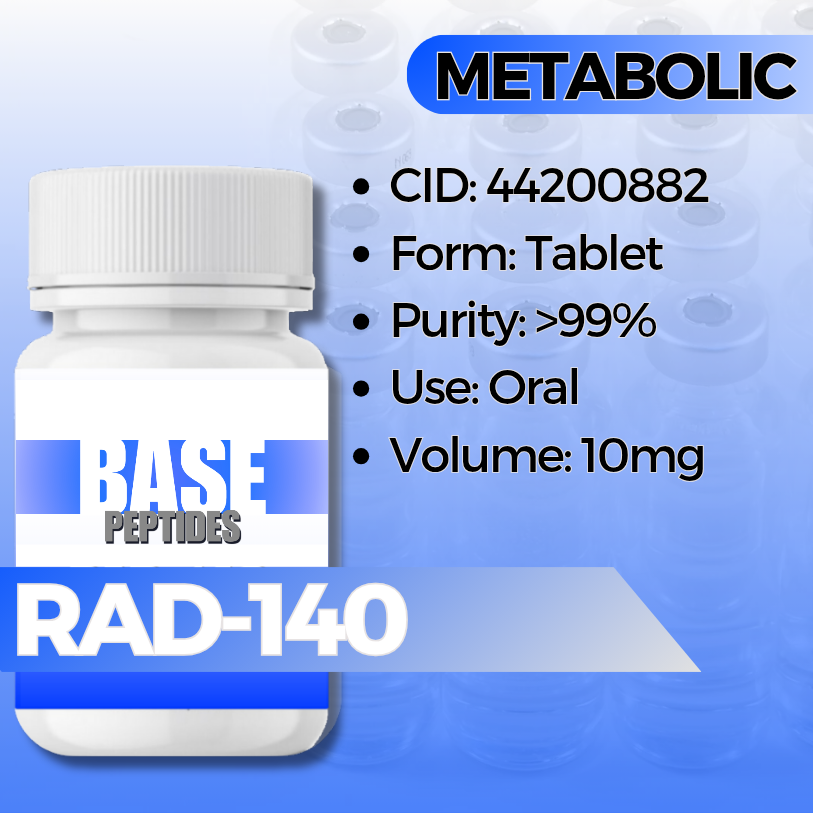
RAD 140 (Testolone) – Research Overview, Mechanism & Scientific Profile
What is RAD 140?
RAD 140, also known as Testolone, is a synthetic compound classified as a Selective Androgen Receptor Modulator (SARM). It has been studied in preclinical research for its ability to bind selectively to androgen receptors in muscle and bone tissue.
Unlike traditional anabolic agents, SARMs like RAD 140 were designed to target specific tissues while minimizing activity in others, making them a major focus in pharmacological and biochemical research.
It is important to note that RAD-140 is not approved for human medical use, and research is limited to laboratory and experimental settings.
Scientific Background of RAD 140
RAD 140 was developed during research into treatments for conditions such as muscle wasting, osteoporosis, and age-related muscle loss. Its main interest comes from its selective binding affinity for androgen receptors.
Researchers study RAD-140 to better understand:
- Androgen receptor signaling pathways
- Muscle tissue protein synthesis mechanisms
- Bone density regulation
- Tissue-selective hormonal activity
Its selectivity is what makes it a widely discussed compound in experimental endocrinology.
How RAD-140 Works (Mechanism of Action)
RAD-140 functions by binding to androgen receptors (AR) in specific tissues, particularly muscle and bone. Once bound, it activates pathways associated with protein synthesis and cellular growth signals.
Androgen Receptor activation→Protein Synthesis↑Androgen\ Receptor \ activation \rightarrow Protein\ Synthesis \uparrow
This simplified pathway is central to why SARMs are studied in muscle and metabolic research models.
Unlike traditional anabolic steroids, RAD-140 is designed to avoid widespread activation in non-target tissues, though research is still ongoing.
Research Applications of RAD-140
RAD-140 is primarily studied in preclinical and laboratory environments for:
1. Muscle Wasting Models
Researchers explore its potential effects on muscle preservation in disease-related models.
2. Bone Health Research
It is studied for its interaction with bone density and skeletal strength pathways.
3. Hormonal Signaling Studies
RAD-140 is used to analyze androgen receptor activity and selective binding behavior.
4. Protein Synthesis Pathways
It helps researchers understand how androgen activation influences muscle cell growth mechanisms.
Key Properties of RAD-140
RAD-140 is of scientific interest due to:
- High affinity for androgen receptors
- Tissue-selective activity profile (research-based)
- Non-steroidal chemical structure
- Oral bioavailability in research settings
- Strong receptor binding compared to older SARM compounds
These properties make it a frequently studied compound in SARM-related research.
Safety and Regulatory Status
RAD-140 remains a research-use-only compound and is not approved for:
- Human consumption
- Medical treatment
- Dietary supplementation
Regulatory agencies have also raised concerns about SARMs due to limited long-term safety data. As a result, RAD-140 is restricted or banned in many athletic organizations and regulated markets.
Potential risks under study include:
- Hormonal disruption
- Liver enzyme changes in experimental settings
- Suppression of natural androgen production
- Unknown long-term effects
RAD-140 vs Traditional Anabolic Compounds
Researchers often compare RAD-140 with anabolic steroids to study receptor selectivity.
RAD-140 (SARM):
- Selective androgen receptor targeting
- Tissue-focused activity (muscle/bone)
- Non-steroidal structure
Traditional anabolic steroids:
- Broad androgen receptor activation
- Less tissue selectivity
- Steroidal hormone structure
Selective Binding→Tissue Specificity↑Selective\ Binding \rightarrow Tissue\ Specificity \uparrow
This difference is a major reason SARMs continue to be studied in pharmaceutical research.
Storage and Handling (Research Context)
In laboratory environments, RAD-140 should be handled under controlled conditions:
- Store in a cool, dry environment
- Protect from light and moisture
- Keep containers tightly sealed
- Follow institutional safety protocols
Proper handling ensures stability and consistency in experimental results.
Why RAD-140 Is Studied
RAD-140 continues to attract scientific interest due to its potential to:
- Improve understanding of androgen receptor selectivity
- Model muscle and bone tissue responses
- Explore non-steroidal anabolic pathways
- Support research into degenerative muscle conditions
Its selective nature makes it a valuable compound for studying hormonal signaling systems.
Conclusion
RAD 140 (Testolone) is a synthetic SARM studied for its interaction with androgen receptors and its potential effects on muscle and bone-related pathways in laboratory research. While it shows strong scientific interest, it remains strictly a research-only compound with limited human safety data.
Ongoing studies aim to better understand its mechanisms, selectivity, and potential implications in endocrine and metabolic science.

Reviews
There are no reviews yet.