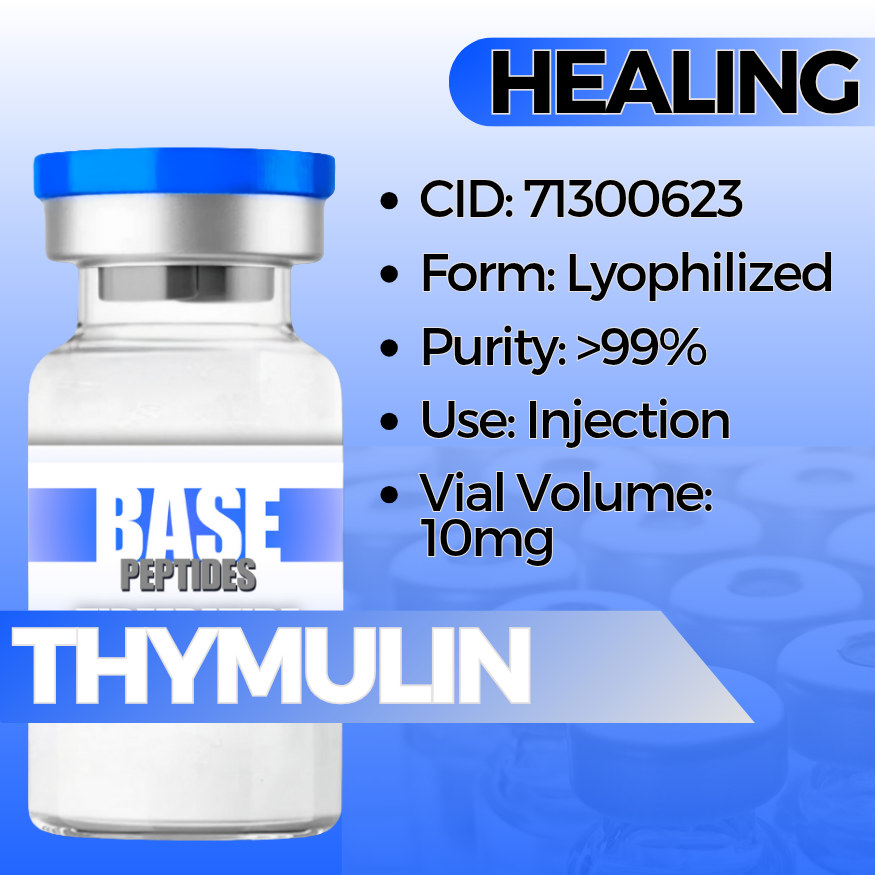
Thymulin – Thymic Peptide Overview & Immunology Research Information
Thymulin is a naturally occurring peptide hormone produced by the thymus gland and is widely studied in immunology and molecular biology research for its role in immune system regulation and T-cell function. It is a zinc-dependent nonapeptide that plays an important role in thymic signaling and immune system development.
In scientific research, it’s examined for its involvement in immune modulation, cellular communication within the immune system, and its interaction with various signaling pathways related to immune response and inflammation. Its role in thymus-derived signaling makes it a key molecule in studies of immune system function.
What is Thymulin?
Thymulin is a peptide produced by epithelial cells of the thymus gland, an organ responsible for the maturation and differentiation of T-lymphocytes (T-cells). It requires zinc as a cofactor to maintain its biological activity.
In research settings, Thymulin is studied for its influence on:
- T-cell differentiation and maturation
- Immune system signaling pathways
- Cytokine production and regulation
- Immune response coordination
Because of its role in immune regulation, Thymulin is frequently used in experimental models focused on immunological processes.
Thymulin and the Immune System
The thymus gland plays a central role in the development of the adaptive immune system. Thymulin is one of the key peptides associated with thymic function and is studied for its role in supporting immune system balance.
Research areas include:
- T-cell development and activation
- Immune signaling pathway regulation
- Interaction with cytokines and immune mediators
- Immune system communication networks
These studies help researchers understand how immune responses are coordinated at the molecular level.
Mechanism of Action (Research Context)
In laboratory research, Thymulin is studied for its interaction with immune cells and signaling pathways. It is believed to influence immune system activity through receptor-mediated processes that affect T-cell behavior and cytokine signaling.
Researchers investigate:
- Thymulin receptor interactions
- Modulation of immune signaling pathways
- Regulation of cytokine production
- Cellular communication within immune systems
These mechanisms are explored in controlled experimental environments to better understand immune regulation.
Scientific Applications
Thymulin is widely used in immunology and biomedical research. Common applications include:
- Immune system function studies
- T-cell signaling and development research
- Cytokine regulation experiments
- Inflammation pathway analysis
- Neuroimmune interaction studies
Its role as a thymic peptide makes it particularly valuable for studying adaptive immune responses.
Thymulin in Immunology Research
In immunology, Thymulin is used to investigate how the thymus influences immune system behavior. Researchers study its role in:
- T-cell maturation processes
- Immune tolerance and regulation
- Response to immune challenges in experimental models
- Interaction between immune and endocrine systems
These studies provide insights into how immune systems maintain balance and respond to external stimuli.
Neuroimmune and Endocrine Research
Thymulin is also studied for its potential role in neuroimmune communication, where the immune system interacts with the nervous and endocrine systems.
Research focuses include:
- Brain-immune system signaling pathways
- Hormonal regulation of immune responses
- Stress-related immune system changes
- Cross-system communication mechanisms
This makes Thymulin relevant in multiple areas of biological research.
Structural and Biochemical Characteristics
Thymulin is a nonapeptide (nine amino acids) that requires zinc to be biologically active.
Key characteristics include:
- Zinc-dependent peptide structure
- Produced in the thymus gland
- Stability in controlled laboratory conditions
- Interaction with immune system signaling pathways
These features make it a unique peptide in immunological research.
Importance in Scientific Research
Thymulin is important in research because it provides a model for studying immune system regulation at the molecular level.
Key research benefits include:
- Understanding T-cell development and signaling
- Studying immune response coordination
- Exploring cytokine regulation pathways
- Investigating immune-endocrine interactions
Its role in immune system function makes it a valuable tool in biomedical research.
Storage and Handling (Research Context)
In laboratory environments, it’s handled under controlled conditions to maintain stability and accuracy:
- Stored in low-temperature environments
- Protected from light and moisture
- Prepared using sterile laboratory techniques
- Used within validated research protocols
Proper handling ensures reliable and reproducible results.
Important Research Disclaimer
It’s intended strictly for laboratory and scientific research use only. It is not approved for human consumption, medical treatment, or diagnostic use. All research must comply with applicable institutional guidelines and local regulations.
Conclusion
It’s a thymus-derived peptide hormone studied for its role in immune system regulation, T-cell development, and cellular signaling pathways. Its zinc-dependent activity and involvement in immune processes make it a key molecule in immunology research.
Ongoing studies continue to explore its influence on immune function, cytokine signaling, and neuroimmune communication, contributing to a deeper understanding of biological system regulation.

Reviews
There are no reviews yet.