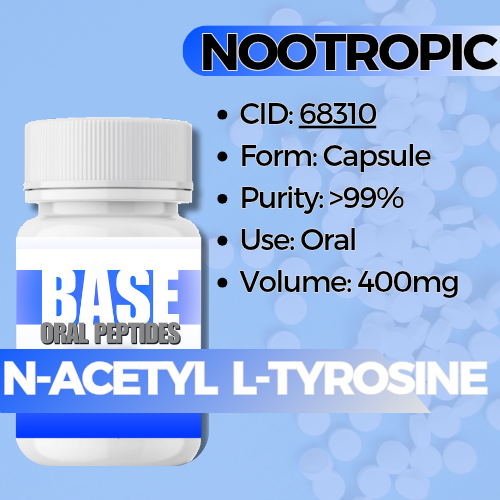
NALT (N-Acetyl L-Tyrosine) – Benefits, Uses & Scientific Overview
What is NALT (N-Acetyl L-Tyrosine)?
NALT N-Acetyl L-Tyrosine, is a modified form of the amino acid L-Tyrosine. It is commonly studied in nutrition and biochemical research due to its role as a precursor to important neurotransmitters such as dopamine, norepinephrine, and epinephrine.
Unlike standard L-Tyrosine, NALT is more water-soluble, which makes it widely used in supplement formulations and laboratory research focused on amino acid absorption and brain chemistry.
Why NALT Matters in the Body
Tyrosine-based compounds are essential for producing key neurotransmitters that influence mood, motivation, stress response, and cognitive performance.
L-Tyrosine→Dopamine→Norepinephrine→EpinephrineL\text{-}Tyrosine \rightarrow Dopamine \rightarrow Norepinephrine \rightarrow Epinephrine
This pathway is central to how the brain responds to stress and maintains focus and alertness under demanding conditions.
How NALT Works (Scientific Mechanism)
NALT is a modified version of L-Tyrosine designed to improve solubility. Once ingested, it is believed to convert back into L-Tyrosine in the body, where it can then participate in neurotransmitter synthesis pathways.
Researchers study NALT for its potential involvement in:
- Catecholamine production pathways
- Stress response regulation
- Cognitive performance under fatigue
- Neurochemical balance in experimental models
However, scientific evidence suggests that NALT may not always convert as efficiently as plain L-Tyrosine in all conditions, which is an active area of research.
Research Interest in NALT
NALT is studied in several scientific and nutritional research fields:
1. Cognitive Performance Research
Researchers examine how tyrosine availability affects attention, focus, and mental performance, especially under stress or fatigue.
2. Stress Response Studies
Because tyrosine is involved in stress hormones, NALT is explored in models involving psychological and physical stress conditions.
3. Neurotransmitter Synthesis
It is used to study dopamine and norepinephrine production pathways in the brain.
4. Metabolic and Amino Acid Absorption Studies
Researchers investigate how modified amino acids behave in digestion and absorption compared to their natural forms.
Potential Effects Studied in Research
Based on scientific literature involving L-Tyrosine pathways, NALT-related research often focuses on:
- Mental alertness under stress conditions
- Cognitive resilience during fatigue
- Neurotransmitter balance
- Adaptation to physical or environmental stress
These effects depend heavily on context, dosage, and physiological conditions.
NALT vs L-Tyrosine (Important Difference)
A key topic in research is the difference between NALT and standard L-Tyrosine.
L-Tyrosine:
- Naturally occurring amino acid
- Direct precursor to neurotransmitters
- Strong research support in stress models
NALT:
- Modified, more water-soluble form
- Designed for improved stability in supplements
- Conversion efficiency to L-Tyrosine is debated in research
NALT→L-Tyrosine→DopamineNALT \rightarrow L\text{-}Tyrosine \rightarrow Dopamine
This conversion pathway is central to understanding how NALT functions in biological systems.
NALT N-Acetyl L-Tyrosine NALT N-Acetyl L-Tyrosine NALT N-Acetyl L-Tyrosine NALT N-Acetyl L-Tyrosine NALT N-Acetyl L-Tyrosine
Safety and Regulatory Considerations
NALT is generally considered a dietary ingredient in many regions, but its effects can vary depending on individual health and usage context.
Important considerations include:
- Limited clinical research compared to L-Tyrosine
- Variability in absorption and metabolism
- Interaction with stress-related neurotransmitter systems
- Importance of appropriate dosing in research settings
As with all bioactive compounds, responsible use and quality sourcing are important.
Why Researchers Study NALT
NALT remains of interest in nutritional neuroscience and amino acid research because it helps scientists explore:
- Neurotransmitter synthesis efficiency
- Stress adaptation mechanisms
- Amino acid transport and metabolism
- Cognitive performance under pressure
It serves as a useful model for studying how modified amino acids behave in biological systems.
Factors That Influence Tyrosine Pathways
Several factors can influence how tyrosine-related compounds function in the body:
- Dietary protein intake
- Stress levels
- Sleep quality
- Genetic differences in metabolism
- Overall nutrient availability
These factors are important in both clinical and experimental research.
Lifestyle Factors That Support Tyrosine Function
Research suggests that healthy habits can support natural neurotransmitter balance:
Balanced Diet
Protein-rich foods provide natural tyrosine sources.
Regular Exercise
Physical activity supports dopamine and norepinephrine regulation.
Quality Sleep
Sleep helps restore neurotransmitter balance and brain function.
Stress Management
Reducing chronic stress supports healthy catecholamine levels.
Conclusion
NALT (N-Acetyl L-Tyrosine) is a modified amino acid studied for its role in neurotransmitter production and cognitive performance pathways. While closely related to L-Tyrosine, it has distinct properties that make it useful in biochemical and nutritional research.
Its primary scientific value lies in studying how amino acid modifications influence absorption, stress response, and brain chemistry.



Reviews
There are no reviews yet.